Anyone who says the word “person” almost always means something definite by it. But what exactly? And does one speaker mean the same thing as the next? This chapter is about the concept of the person — that is, about what we actually have in mind when we say “person.” At first that sounds like a purely linguistic question. In reality it is one of the most important questions there are. For the answer determines who counts as a person, who possesses dignity, and who has a right to life. The answer to this question determines how we deal with embryos, with the dying, with people with severe disabilities. So this is no question for the ivory tower, but one that concerns every human being.
As Edmund Husserl emphasized long ago: “But as long as the concepts are not distinguished and clarified, all further effort is hopeless.”1 In no field of thought has the confusion of words and meanings done as much damage as in the question of the essence of the human being.
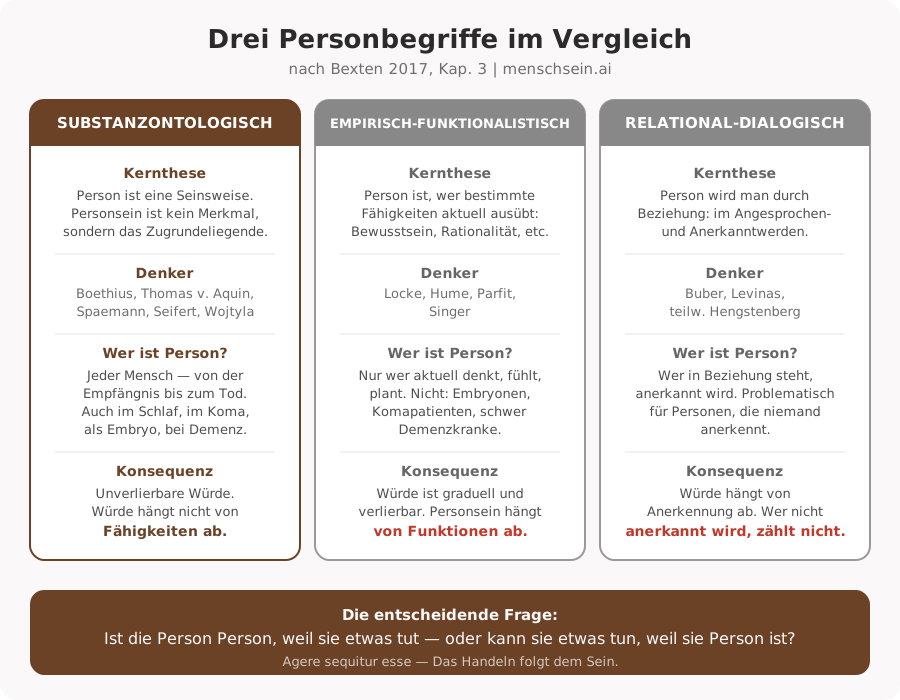
This chapter therefore lays the groundwork. It asks: What does the word “person” mean? What is a “concept” in the first place? How are “human being” and “person” related? And what fundamentally different views of the person are there? Answering these questions is the precondition for tackling the main question in the next chapter: What is human personhood?
Sections
- What Does the Word “Person” Mean?
- What Is a Concept?
- Person — a Concept with Christian Roots?
- Three Fundamental Views of the Person
- Examples of the Different Views
- Human Being and Person — the Same?
- Summary and Outlook
Cross-section: The argument map of the concept of person shows the argumentative positions of the individual thinkers as syllogisms and makes visible who supports whom, who refutes whom, and who presupposes whom.
Next chapter → · ← Previous chapter